EN
TypeScript - covariance concept
10
points

In this short article, we would like to explain covariance concept in TypeScript.
Main concept:
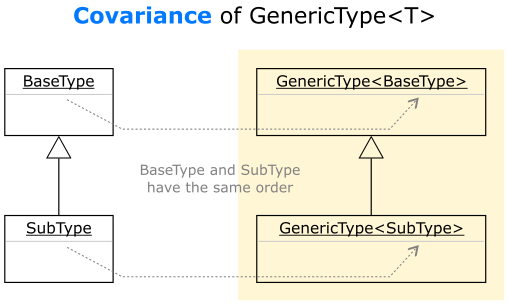
Main definition:
GenericType<...>types are covariant if it preserves the ordering of types (≤), which orders types from more specific to more abstract, so:if
BaseType ≤ SubType, thenGenericType<BaseType> ≤ GenericType<SubType>.
In simple worlds:
Covariance alows to cast, without any restrictions, some specific types to more abstract types when composed types are used.
Practical examples
Example 1:
class Animal {
    public name: string;
    public constructor(name: string) {
        this.name = name;
    }
}

class Cat extends Animal {
    public mousehunter: boolean;
    public constructor(name: string, mousehunter: boolean) {
        super(name);
        this.mousehunter = mousehunter;
    }
}

const createTom = async (): Promise<Cat> => { return new Cat('Tom', true); };
const createAnimal = async (): Promise<Animal> => { return await createTom(); };
//                             ^^^^^^^^^^^^^^^             ^^^^^^^^^^^^^^^^^
//                                    |                            |
//  According to covariance concept we can cast Promise<Cat> to Promise<Animal>.

// ...
Example 2:
class Animal {
    public name: string;
    public constructor(name: string) {
        this.name = name;
    }
}

class Cat extends Animal {
    public mousehunter: boolean;
    public constructor(name: string, mousehunter: boolean) {
        super(name);
        this.mousehunter = mousehunter;
    }
}

const cats: Array<Cat> = [
    new Cat('Tom', true),
    new Cat('Simba', false),
    new Cat('Nala', false)
];

const animals: Array<Animal> = cats;
//             ^^^^^^^^^^^^^   ^^^^
//                   |          |
//  According to covariance concept we can cast Array<Cat> to Array<Animal>.

// ...